
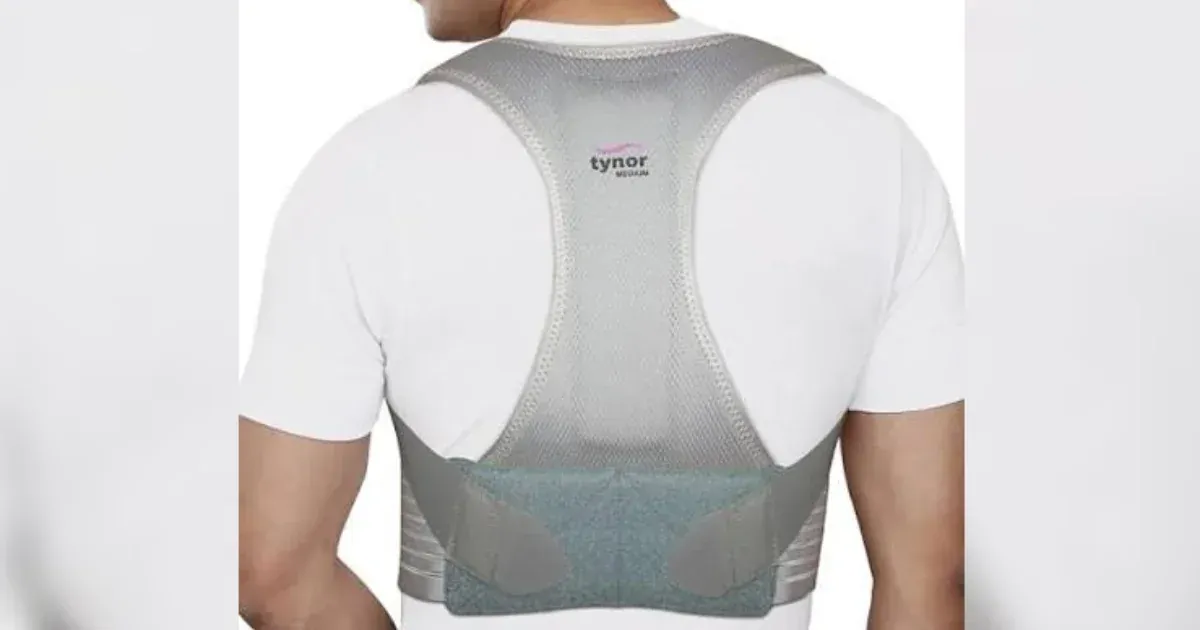
The Tynor Posture Corrector is an orthopedic support designed to help support the upper back and shoulders and encourage a more upright posture during daily activities. It can be useful for people who spend long periods sitting, working at a desk, studying, or using computers. This guide explains its features, uses, benefits, fitting considerations, care, and what to consider when buying a posture corrector in Nepal.
The Tynor Posture Corrector is an orthopedic support designed to provide support around the upper back and shoulder area while encouraging a more upright body position. Poor posture can become common during activities that involve prolonged sitting, computer work, studying, mobile-phone use, or other situations where the shoulders remain forward for extended periods. A posture-support device can provide a physical reminder to maintain a more appropriate position while performing everyday activities. The Tynor Posture Corrector is intended as a supportive orthopedic product and should be used according to its design, fitting instructions, and the user's individual requirements.
One of the important considerations when selecting a posture corrector in Nepal is comfort. A posture-support product needs to fit appropriately around the body without creating excessive pressure or restricting normal movement. The support should allow the user to carry out routine activities comfortably while providing the intended level of support. Factors such as size, adjustability, material, strap placement, ease of wearing, and overall construction can influence the user experience. A correctly fitted posture corrector is generally more practical for regular use than one that is too tight, too loose, or uncomfortable.
The Tynor Posture Corrector can be considered for people looking for additional upper-body support during everyday activities, particularly when prolonged sitting or poor positioning is part of their routine. It may be useful for office workers, students, computer users, and individuals who want a wearable reminder to maintain an upright posture. However, a posture corrector should not be considered a replacement for professional assessment, exercise, ergonomic improvements, or treatment when persistent pain or another medical problem is present. For users in Nepal looking for an orthopedic posture-support product, selecting the appropriate size and using it correctly are important considerations.
What Is the Tynor Posture Corrector?
A posture corrector is a wearable orthopedic support designed to provide support around the shoulders and upper back and encourage a more upright posture. The support is worn around the upper body and provides gentle positioning assistance during normal activities.
The Tynor Posture Corrector is designed for people who want additional support while working, studying, sitting, or carrying out everyday activities. Its purpose is to encourage better positioning rather than force the body into an unnatural posture.
How Does a Posture Corrector Work?
A posture corrector works by providing support around the upper body and acting as a physical reminder when the shoulders move too far forward. When worn correctly, it can encourage the user to become more aware of their shoulder and upper-back position.
The device does not independently strengthen the muscles responsible for posture. For long-term posture improvement, appropriate exercise, movement, ergonomic adjustments, and professional advice may also be important depending on the individual's situation.
Key Features of Tynor Posture Corrector
An important feature of a posture corrector is its supportive design around the shoulder and upper-back region. The design should allow the user to maintain a relatively natural range of movement while providing the intended posture support.
Adjustability is also important because body shapes and sizes differ between users. A properly adjusted support should remain securely positioned without being unnecessarily tight. Users should always follow the product's size and fitting instructions when selecting and wearing the Tynor Posture Corrector.
The material and construction are also relevant for everyday use. Since posture correctors may be worn for routine activities, comfort, breathability, ease of wearing, and the ability to adjust the support can influence how practical the product is for regular use.
Uses of a Posture Corrector
A posture corrector may be used during activities where maintaining an upright upper-body position is important. Office workers may use posture support while working at a desk, while students may find it useful during prolonged study sessions.
It can also be considered by people who spend extended periods using computers, laptops, or mobile devices. In these situations, the correct ergonomic setup remains important, and a posture corrector should be viewed as a supportive aid rather than the only solution for posture-related concerns.
Who Can Use a Posture Corrector?
A posture corrector may be suitable for adults who want additional support and awareness around the upper back and shoulders during everyday activities. It can be particularly relevant to people whose routines involve prolonged sitting or desk-based work.
The appropriate product and fitting requirements can differ between individuals. Anyone experiencing persistent pain, injury, numbness, weakness, or another significant symptom should seek advice from an appropriate healthcare professional rather than relying solely on a posture-support product.
Benefits of Using a Posture Corrector
One potential benefit of a posture corrector is increased posture awareness. The physical support can remind the wearer to avoid excessively rounded shoulder positioning and encourage attention to upper-body alignment.
A posture corrector may also provide additional support during routine activities such as sitting, studying, working, or using a computer. Its usefulness depends on correct sizing, appropriate wearing, individual comfort, and how it is incorporated into a broader approach to posture and ergonomics.
How to Choose the Right Tynor Posture Corrector
The first consideration should be size and fit. A posture corrector that is too tight may become uncomfortable, while one that is too loose may not provide the intended support. Measurements should be taken according to the manufacturer's sizing instructions rather than choosing a size based only on general clothing size.
The intended use should also be considered. Someone looking for support during desk work may have different comfort requirements from someone who wants to use the product during general daily activities. Material, adjustability, strap design, ease of wearing, and overall comfort are therefore important factors.
How to Wear a Posture Corrector
The posture corrector should be positioned according to the manufacturer's instructions, with the support sitting correctly around the shoulders and upper back. Straps should be adjusted so that the product stays in position without excessive tightness.
It is generally better to introduce a new support gradually and pay attention to comfort. If the device causes significant discomfort, numbness, skin irritation, breathing difficulty, or increased pain, it should be removed and the fit should be reassessed.
Posture Corrector and Ergonomics
A posture corrector works best as part of a broader approach to healthy posture. Desk height, chair support, monitor position, keyboard and mouse placement, and regular movement can all affect how the body is positioned during work.
People who sit for long periods should also take regular movement breaks rather than remaining in the same position for extended periods. A posture-support product can provide additional awareness, but good ergonomics and regular movement remain important.
Care and Maintenance
The Tynor Posture Corrector should be cared for according to its manufacturer's instructions. Proper cleaning and drying can help maintain the material and comfort of the support.
Users should regularly inspect the product for signs of excessive wear, damaged straps, stitching problems, or other deterioration. A damaged orthopedic support should not be relied upon for continued use.
Tynor Posture Corrector in Nepal
The Tynor Posture Corrector in Nepal can be a useful option for people looking for wearable upper-back and shoulder support during daily activities. It may be relevant for office workers, students, computer users, and others who want a physical reminder to maintain a more upright posture.
When purchasing a posture corrector in Kathmandu or elsewhere in Nepal, buyers should consider the correct size, comfort, adjustability, intended use, product quality, and availability of reliable after-sales support. Choosing the right fit is particularly important for a wearable orthopedic product.
Conclusion
The Tynor Posture Corrector is designed to provide upper-body support and encourage greater awareness of shoulder and upper-back positioning during everyday activities. It can be considered by people who spend long periods sitting, studying, working at a computer, or performing other activities where posture awareness is important.
When choosing a posture corrector in Nepal, focus on appropriate sizing, comfort, adjustability, material, intended use, and correct fitting. A posture corrector can be used as a supportive aid, but maintaining good ergonomics, regular movement, and appropriate physical activity is also important for overall posture. People with persistent pain or other concerning symptoms should seek professional healthcare advice.