
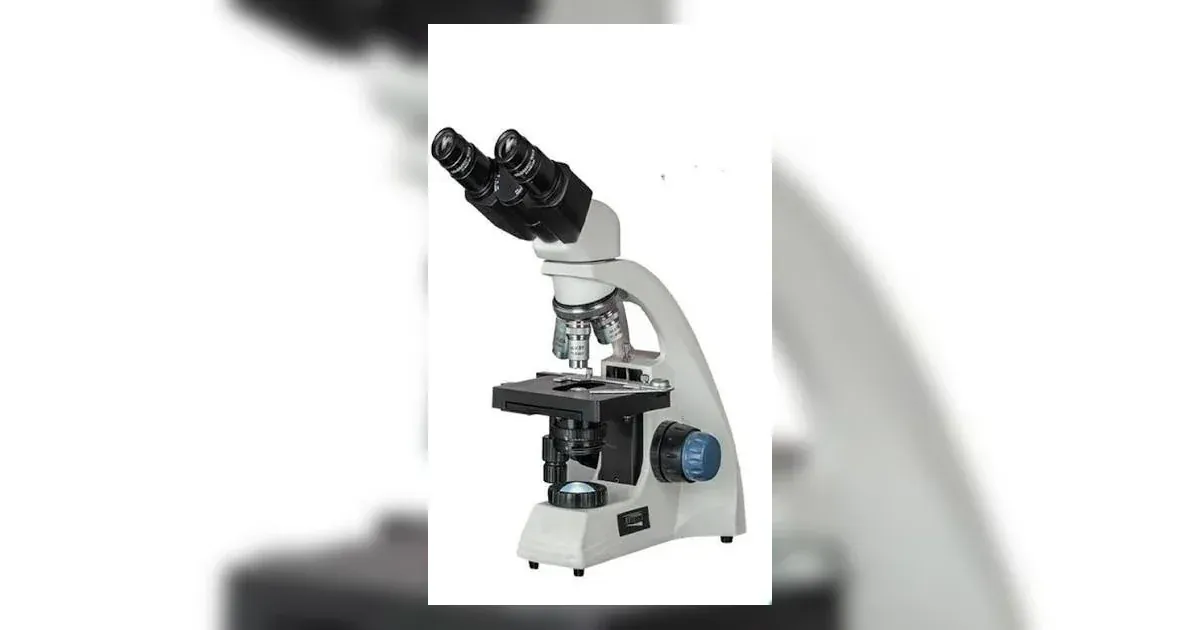
A binocular microscope is a laboratory microscope designed with two eyepieces for comfortable observation of specimens using both eyes. It is widely used in medical laboratories, pathology, microbiology, educational institutions, research facilities, and other professional settings. This guide explains the features, uses, important specifications, maintenance requirements, and factors to consider when buying a binocular microscope in Nepal.
A binocular microscope is a compound laboratory microscope equipped with two eyepieces that allow the user to observe a specimen using both eyes. This design can provide a more comfortable viewing experience during routine microscopy and is particularly useful when laboratory personnel spend extended periods examining slides. A typical binocular microscope combines a binocular viewing head, objective lenses, eyepieces, a mechanical stage, focusing controls, a condenser, and an illumination system. Depending on the model, microscopes may use achromatic or plan-achromatic objectives and LED illumination.
Binocular microscopes are commonly used for examining prepared slides and specimens in medical and educational laboratories. Typical configurations may provide magnifications from around 40× to 1000×, using combinations such as 10× eyepieces with 4×, 10×, 40× and 100× objectives. The exact magnification, optical system, condenser, stage size, illumination, and focusing mechanism vary between models. Some laboratory specifications include 100× oil-immersion objectives for higher-magnification observation.
When choosing a binocular microscope in Nepal, it is important to look beyond maximum magnification. Optical quality, objective types, numerical aperture, illumination, focusing precision, mechanical-stage movement, viewing comfort, build quality, intended application, availability of accessories, and after-sales support all affect the suitability of the microscope. For medical laboratories, educational institutions, pathology facilities, and other professional users, the microscope should be selected according to the type of specimens being examined and the level of microscopy required.
What Is a Binocular Microscope?
A binocular microscope is a compound microscope with a viewing head containing two eyepieces. The optical system divides the image so that the user can view the specimen through both eyes. This can make routine slide observation more comfortable than using a single-eyepiece microscope.
The binocular head is usually designed with an adjustable interpupillary distance so users can position the eyepieces comfortably. Many models also provide diopter adjustment to compensate for differences between the user's eyes. Binocular microscope heads are commonly inclined and may rotate to provide a more convenient viewing position.
How Does a Binocular Microscope Work?
A binocular microscope uses a combination of objective lenses and eyepieces to magnify a specimen. Light from the illumination system passes through or reflects onto the specimen, depending on the microscope design, and the objective lens forms a magnified image. The eyepiece then provides additional magnification for viewing.
Total magnification is determined by multiplying the objective magnification by the eyepiece magnification. For example, a 10× eyepiece combined with a 40× objective produces 400× total magnification. A common laboratory configuration with 4×, 10×, 40× and 100× objectives and 10× eyepieces provides 40×, 100×, 400× and 1000× magnification.
Key Features of a Binocular Microscope
One of the main features is the binocular viewing head, which allows observation with both eyes. Adjustable interpupillary distance and diopter adjustment can help different users achieve a comfortable viewing position. Some laboratory models have viewing heads inclined around 30° and capable of 360° rotation.
The objective lens system is another important component. Common laboratory microscopes may include 4×, 10×, 40× and 100× objectives. Achromatic objectives are designed to reduce certain optical aberrations, while plan-achromatic or plan objectives can provide a flatter field of view, which can be useful for specimen examination and imaging.
A mechanical stage holds the microscope slide and allows controlled movement in the X and Y directions. This makes it easier to position a specific area of the specimen under the objective. Many professional microscopes combine the mechanical stage with coaxial controls located close to the focusing knobs.
Modern laboratory microscopes commonly use LED illumination. LED systems can provide consistent illumination while producing relatively little heat and generally have long operating lives. Some microscopes also provide adjustable brightness and an Abbe condenser with an iris diaphragm for controlling illumination and contrast.
Common Uses of Binocular Microscopes
Binocular microscopes are used in a variety of laboratory and educational environments. Medical laboratories may use them for routine microscopic examination of prepared specimens, while educational institutions use them for teaching practical microscopy and biological sciences.
They are also used in areas such as clinical diagnostics, pathology, microbiology, pharmaceutical laboratories, and research, depending on the microscope's optical configuration and intended application. Laboratory microscope specifications commonly identify these areas as applications for binocular systems.
In Nepal, binocular microscopes are also relevant to medical laboratory education and laboratory facilities. Nepal Health Professional Council documentation for medical laboratory training lists binocular microscopes among the equipment required for areas including parasitology and emergency laboratory facilities.
Magnification and Objective Lenses
Magnification is one of the first specifications buyers usually consider, but higher magnification does not automatically mean better microscopy. The quality of the objective, numerical aperture, illumination, specimen preparation, and optical system all contribute to the amount of useful detail that can be observed.
A commonly used laboratory configuration is 4×, 10×, 40× and 100× objectives combined with 10× eyepieces, producing 40×, 100×, 400× and 1000× total magnification. The 100× objective is generally designed for oil-immersion microscopy when specified by the manufacturer.
Mechanical Stage and Focusing System
The mechanical stage provides controlled movement of the specimen slide and is an important feature for laboratory work. Instead of manually moving a slide, the user can use stage controls to move the specimen precisely across the viewing area.
A binocular microscope may also have coarse and fine focusing controls. Coarse focusing is used for larger adjustments, while fine focusing allows more precise adjustment when working at higher magnifications. Some professional microscopes include coaxial focusing controls and safety stops to reduce the possibility of the objective contacting the slide.
Illumination and Condenser
Good illumination is essential for clear microscopic observation. Many modern binocular microscopes use LED illumination with adjustable brightness. An LED source can provide consistent lighting while keeping heat generation relatively low.
The condenser is responsible for directing and focusing light onto the specimen. An Abbe condenser with an iris diaphragm is common in laboratory microscopes and allows the user to control the illumination cone and improve contrast according to the specimen and objective being used.
Binocular Microscope for Medical Laboratories
Medical laboratories require microscopes that can provide clear and consistent observation of prepared specimens. Depending on the laboratory's work, a microscope may be used for routine examination in areas such as hematology, parasitology, microbiology, and pathology.
For professional laboratory use, buyers should pay attention to the optical quality, objective configuration, focusing mechanism, mechanical-stage movement, illumination, condenser, ergonomic design, and availability of replacement components. The microscope should match the laboratory's actual diagnostic or educational requirements.
How to Choose a Binocular Microscope in Nepal
When choosing a binocular microscope in Nepal, start by identifying the intended application. A microscope for a school or basic teaching laboratory may have different requirements from one intended for a medical laboratory, pathology department, or research facility.
Next, check the objective configuration and useful magnification range. Consider whether 40×–1000× magnification is appropriate for the intended work and whether a 100× oil-immersion objective is required. Optical quality and numerical aperture are more important than simply selecting the microscope with the highest advertised magnification.
The viewing head, mechanical stage, focusing controls, condenser, illumination, and ergonomics should also be evaluated. If the microscope will be used for long periods, comfortable binocular viewing and smooth controls can be particularly useful.
Finally, consider warranty, accessories, spare parts, servicing, and technical support in Nepal. Reliable support can be important for laboratory equipment because optical alignment, illumination components, mechanical parts, and other accessories may eventually require servicing or replacement.
Microscope Maintenance and Care
Proper maintenance helps preserve optical performance and extend the working life of a microscope. The lenses should be handled carefully and cleaned using appropriate optical-cleaning materials rather than ordinary cloth or household cleaning products.
The microscope should be protected from dust, moisture, excessive heat, and accidental impact. When not in use, keeping the instrument covered can help protect the optical components and mechanical parts. If an oil-immersion objective is used, the immersion oil should be removed according to the manufacturer's recommended cleaning procedure.
Regularly checking the stage movement, focusing mechanism, illumination, electrical connection, and objective condition can also help identify problems before they affect laboratory work.
Binocular Microscope in Nepal
A binocular microscope in Nepal can be suitable for medical laboratories, pathology and microbiology facilities, educational institutions, research laboratories, and other professional environments requiring routine microscopic examination. The right microscope depends on the type of specimen, required magnification, optical quality, illumination, workload, and available accessories.
For buyers in Kathmandu and other parts of Nepal, it is useful to select laboratory equipment based on the actual application rather than maximum specifications alone. Availability of technical support, replacement parts, warranty, and accessories should also be considered when purchasing a microscope.
Conclusion
A binocular microscope provides a comfortable two-eye viewing system combined with objective lenses, eyepieces, a mechanical stage, focusing controls, condenser, and illumination system for detailed examination of microscopic specimens. Depending on its configuration, it can support applications in medical laboratories, pathology, microbiology, education, pharmaceutical laboratories, and research.
When buying a binocular microscope in Nepal, consider the objective lenses, useful magnification, optical quality, numerical aperture, mechanical stage, focusing system, illumination, condenser, ergonomic design, accessories, and after-sales support. Selecting a microscope according to the intended application will help ensure that the equipment is appropriate for the laboratory's actual requirements.